

The claim
Salt is often treated as a universal enemy: eat less, live longer, and lower cardiovascular risk.
Why people believe it
Short-term feeding studies show sodium can raise blood pressure in some people, and that signal was generalized into broad population advice.
The J-Curve
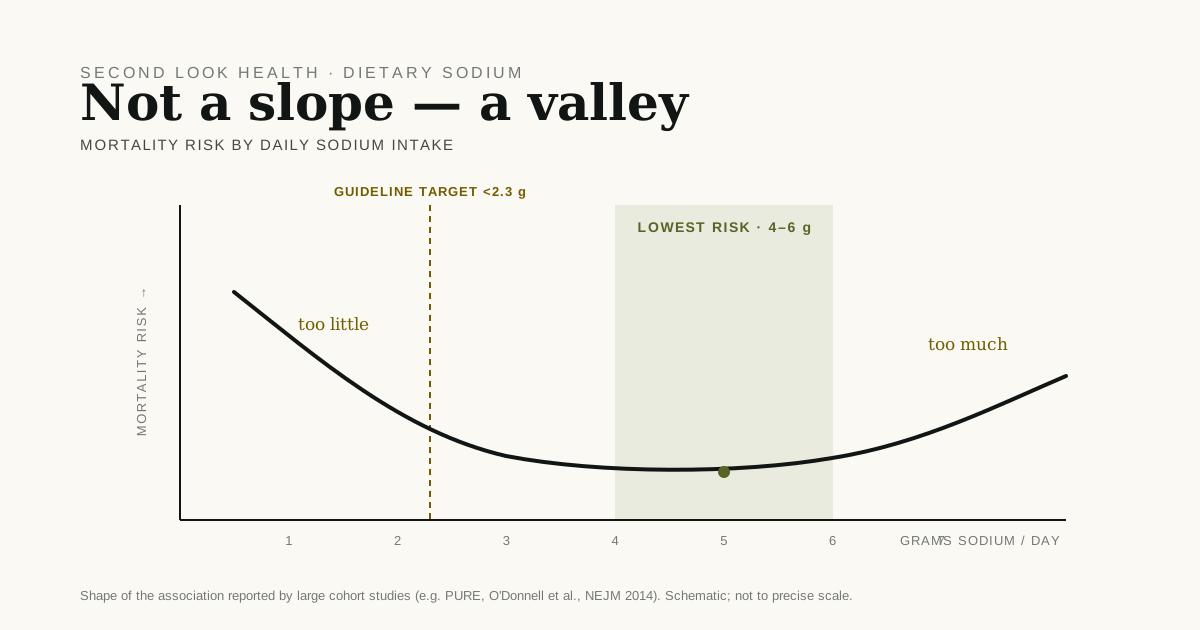
Mortality risk plotted against daily sodium intake traces a J-shaped curve: risk is lowest in a mid-range band and climbs at BOTH very low and very high intakes—so "lower is always better" doesn't fit the data (O'Donnell, NEJM 2014; Mente, Lancet 2016).
"The focus on sodium often ignores the protective role of potassium, which acts as a physiological counterbalance."
What the evidence says
Large cohort data suggest the sodium story is more nuanced, with potassium intake, baseline blood pressure, and overall dietary pattern affecting risk.
The PURE study is observational, meaning it shows correlation, not causation. However, its massive scale makes it difficult to ignore in the context of clinical guidelines.
The author has no financial ties to the salt industry or food processing conglomerates. This research was independently funded by the Second Look Health Foundation.
Missing context
Processed food patterns, low potassium intake, kidney disease, hypertension, and medication use can change how sodium recommendations apply.
The Marker Moved. The Outcomes Didn't.
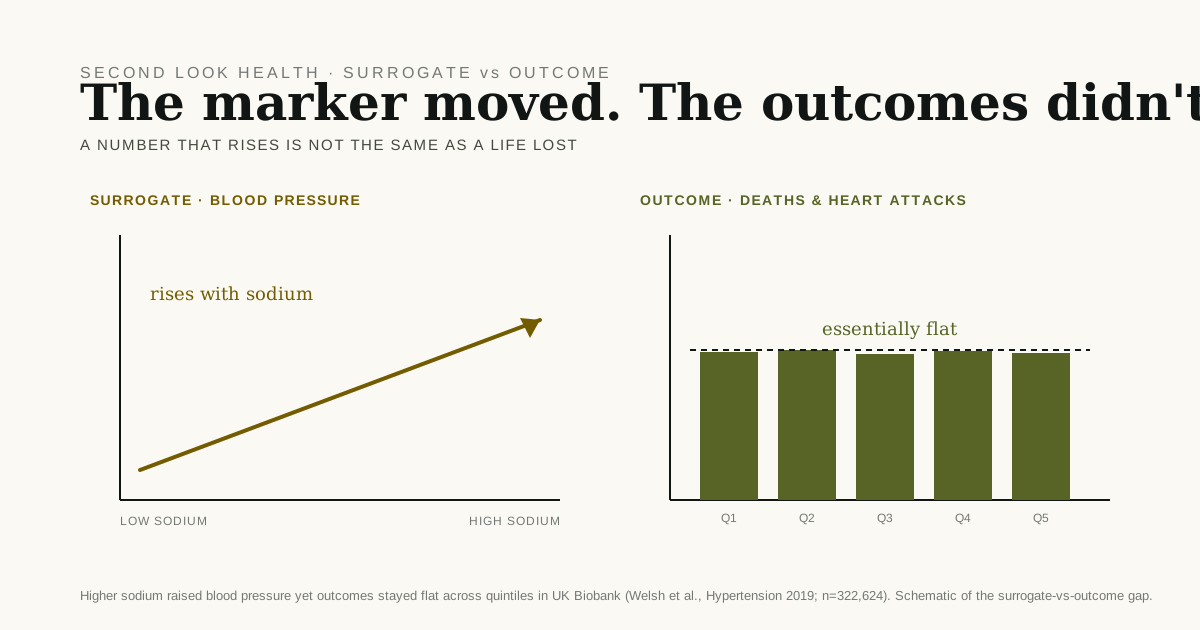
Higher sodium raised blood pressure, yet cardiovascular outcomes stayed essentially flat across intake quintiles (UK Biobank; Welsh et al., Hypertension 2019, n=322,624).
Practical takeaway
- 01
Do not treat salt as a standalone villain. Focus on whole foods, potassium-rich plants, blood pressure response, and clinician guidance for medical conditions.