

The Claim
For decades, medical consensus has been unwavering: salt is the silent killer. Excessive sodium intake is linked directly to hypertension, stroke, and cardiovascular disease. We are told to hide the shaker and scan every label for the sodium hidden in processed goods.
Why People Believe It
The logic is mechanically sound: sodium attracts water. When there is excess sodium in your bloodstream, it pulls water into your vessels, increasing the total volume of blood. More blood in the same space equals higher pressure. Over years, this "pressure cooker" effect damages the delicate lining of the arteries.
The J-Curve
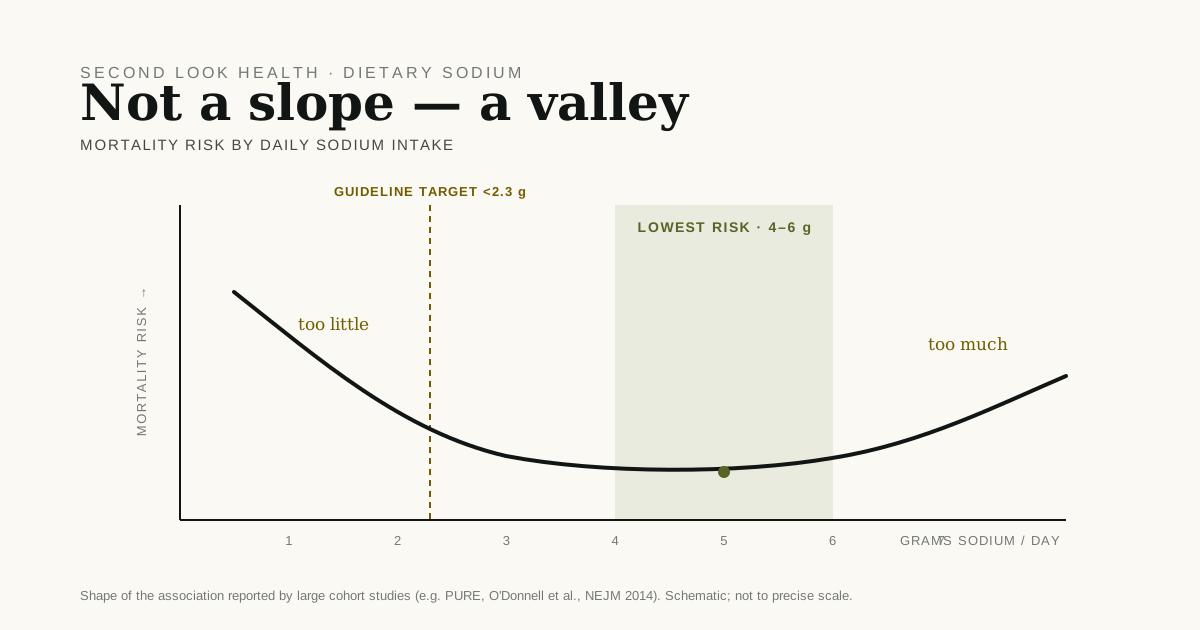
Mortality risk plotted against daily sodium intake traces a J-shaped curve: risk is lowest in a mid-range band and climbs at BOTH very low and very high intakes—so "lower is always better" doesn't fit the data (O'Donnell, NEJM 2014; Mente, Lancet 2016).
"The focus on sodium often ignores the protective role of potassium, which acts as a physiological counterbalance."
What the Research Shows
Large-scale epidemiological studies, including the controversial PURE study, have challenged the "lower is always better" mantra. The data indicates that the highest risk of cardiovascular events actually occurs in populations consuming less than 3g of sodium per day—lower than the current USDA recommendation.
The PURE study is observational, meaning it shows correlation, not causation. However, its massive scale makes it difficult to ignore in the context of clinical guidelines.
The author has no financial ties to the salt industry or food processing conglomerates. This research was independently funded by the Second Look Health Foundation.
The Missing Context
Most salt in the modern diet (approx. 70%) doesn't come from the salt shaker; it comes from processed breads, sauces, and packaged snacks. These foods are also high in refined sugars and industrial seed oils—factors that may be the true culprits of systemic inflammation.
The Marker Moved. The Outcomes Didn't.
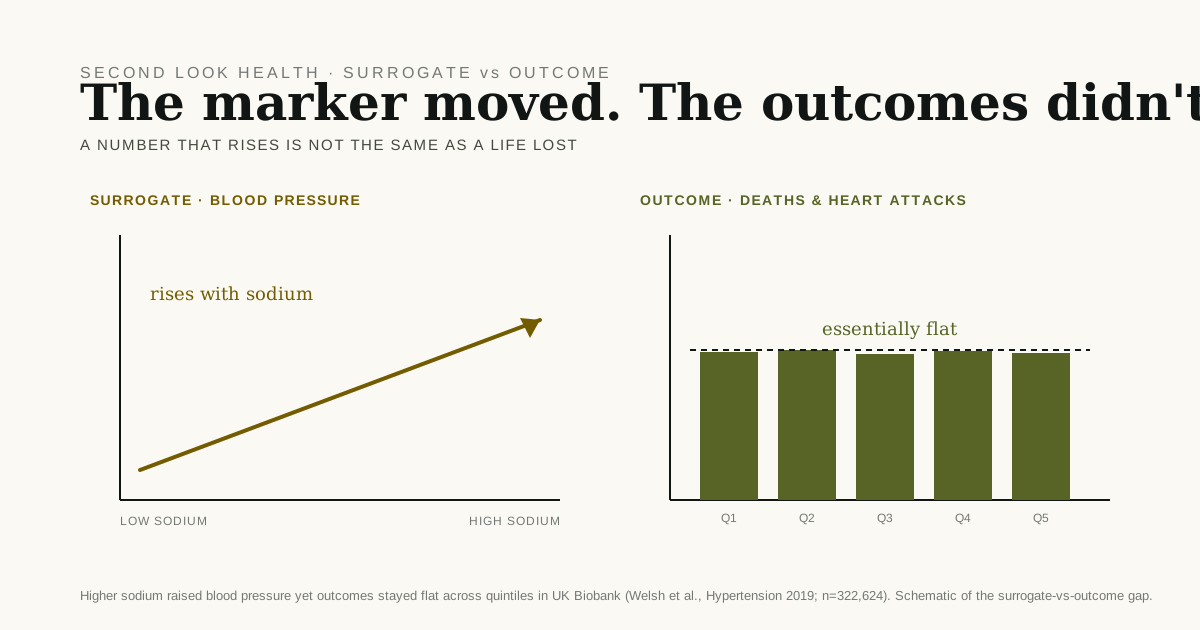
Higher sodium raised blood pressure, yet cardiovascular outcomes stayed essentially flat across intake quintiles (UK Biobank; Welsh et al., Hypertension 2019, n=322,624).
Practical Takeaway
- 01
Focus on whole foods first. If you cook from scratch, you can afford to salt your food to taste.
- 02
Prioritize potassium. Aim for a 2:1 potassium-to-sodium ratio through greens and tubers.
- 03
Listen to your body. Intense exercise and high heat dramatically increase sodium requirements.