


The Claim
For half a century the official plot has never wavered: butter, red meat, and a nicely marbled steak are quietly trying to kill you, and your safest bet is a fortress built of bread, cereal, pasta, and rice. The 1992 USDA food pyramid made it the law of the plate—6 to 11 servings of grain a day holding up the base, with fat and meat exiled to the narrow tip to be nibbled "sparingly," like a vice you were trying to quit.
Why We Blamed Meat and Fat
Blame a tidy story from the 1950s. Ancel Keys linked saturated fat to blood cholesterol and cholesterol to heart attacks, and the logic was almost too neat to resist: fat raises LDL, LDL clogs the pipes, therefore fat kills. Governments printed the hypothesis onto guidelines, the 1992 pyramid crowned grains as the foundation of a healthy life, and a food industry built on cheap wheat and vegetable oil was delighted to keep the story on the shelf. Repeat anything for two generations and it stops sounding like a hypothesis and starts sounding like your grandmother—long before anyone actually proved it was true.
What Actually Changed
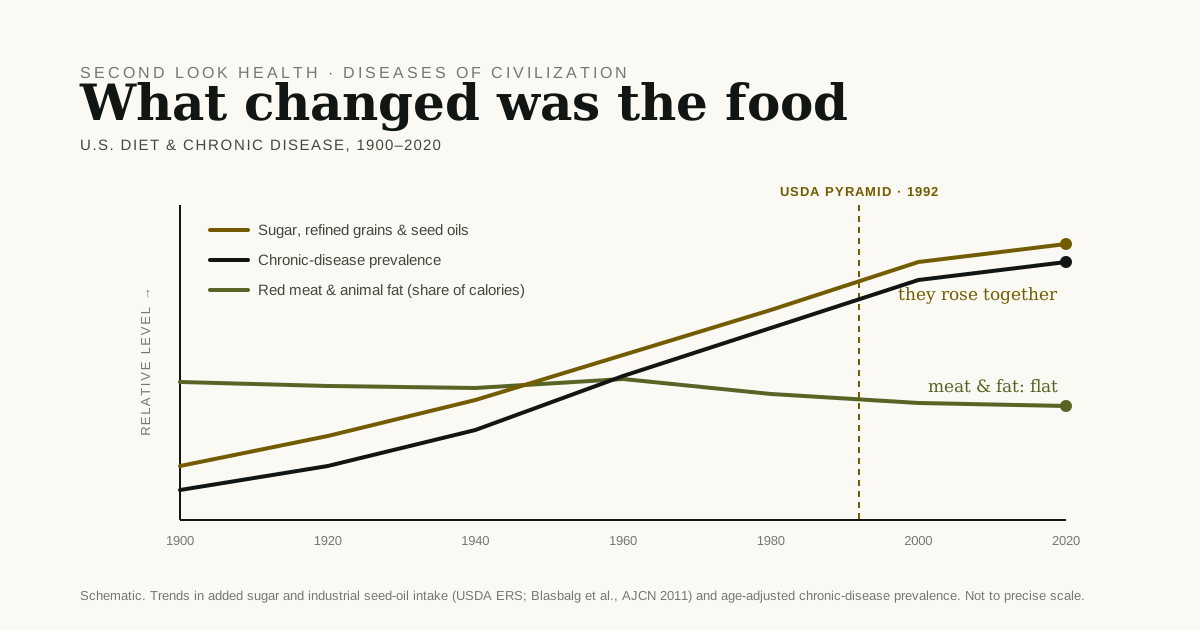
Across the 20th century, calories from sugar, refined grain, and seed oils climbed in near-lockstep with chronic disease, while the share of calories from red meat and animal fat barely budged (schematic drawn from USDA availability data; Blasbalg, AJCN 2011; Bray, AJCN 2004).
"We spent fifty years rationing the foods humans have always eaten, while the genuinely new ingredients—refined sugar and industrial seed oils—quietly took over the plate."
What the Research Shows
When the saturated-fat theory finally sat for its exams, it flunked. Three large modern syntheses—Siri-Tarino (2010, 21 cohorts, ~348,000 people), Chowdhury (2014), and de Souza (2015)—each found no significant association between saturated-fat intake and heart disease. And when investigators dug up the buried data from the Minnesota Coronary Experiment, a rigorous 1968–73 randomized trial, swapping saturated fat for linoleic-acid-rich vegetable oil dutifully lowered cholesterol and delivered exactly zero survival benefit—if anything, a few more deaths. Meanwhile the genuinely new arrivals were quietly rewriting the menu: linoleic acid from seed oils rose from roughly 2.8% to 7.2% of calories, soybean-oil intake climbed more than a thousand-fold, and high-fructose corn syrup jumped more than 1,000% between 1970 and 1990. And in the one experiment that actually put processing on trial—Kevin Hall's 2019 inpatient study—people handed an ultra-processed diet ate about 500 more calories a day than on a calorie-matched unprocessed one, without noticing a thing.
A caveat worth shouting: most of this is ecological and observational. Diets and diseases climbing together over a century is a correlation, not a conviction, and healthy-user bias smudges the cohort data. But the direction is stubbornly consistent, and the two strongest exhibits—the Minnesota re-analysis and Hall's processing trial—are randomized. The honest verdict isn't “meat good, sugar poison.” It's that the confident case against saturated fat was never really there to begin with.
The author has no financial ties to the meat, dairy, grain, or seed-oil industries. This review was independently funded by the Second Look Health Foundation. It revisits the strength of the evidence; it is not a prescription to eat any single way.
The Missing Context
“Meat and fat” isn't one thing, and neither is the evidence. Processed meats—not fresh—carry a modest but real signal for colorectal cancer, and industrial trans fats (the partially hydrogenated cousins of these same seed oils) are genuinely nasty: de Souza tied them to a 28% higher risk of dying from heart disease. Traditional populations are the plot twist. The Tsimane of Bolivia have the lowest rate of coronary artery disease ever measured—85% walking around with zero coronary calcium—and mid-century surveys of Kitava in the Pacific found heart attacks and strokes essentially missing. Their diets looked nothing like each other; the one thing they shared was never touching the industrial Western plate. And to be clear: the claims about cancer and autoimmune disease are far shakier than the headline—the strongest timeline by a mile is for heart disease, type 2 diabetes, and obesity.
We Charged the Wrong Suspect
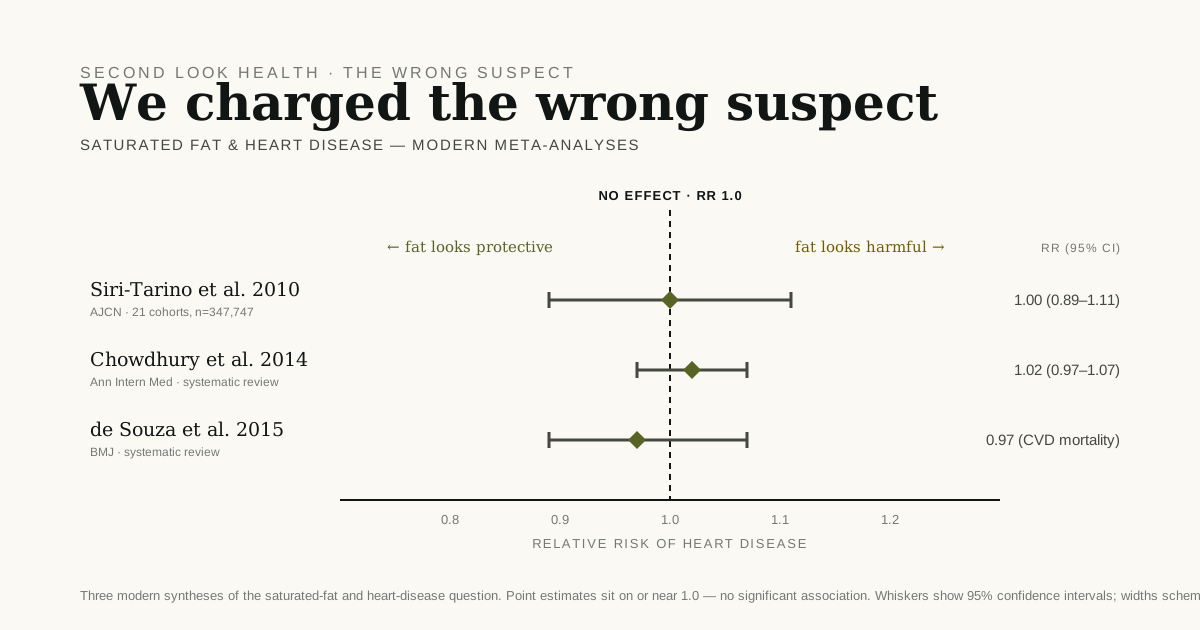
Three modern meta-analyses of saturated fat and heart disease. The point estimates sit on or near 1.0—no significant association (Siri-Tarino, AJCN 2010, 21 cohorts, n=347,747; Chowdhury, Ann Intern Med 2014; de Souza, BMJ 2015).
The New Ingredients
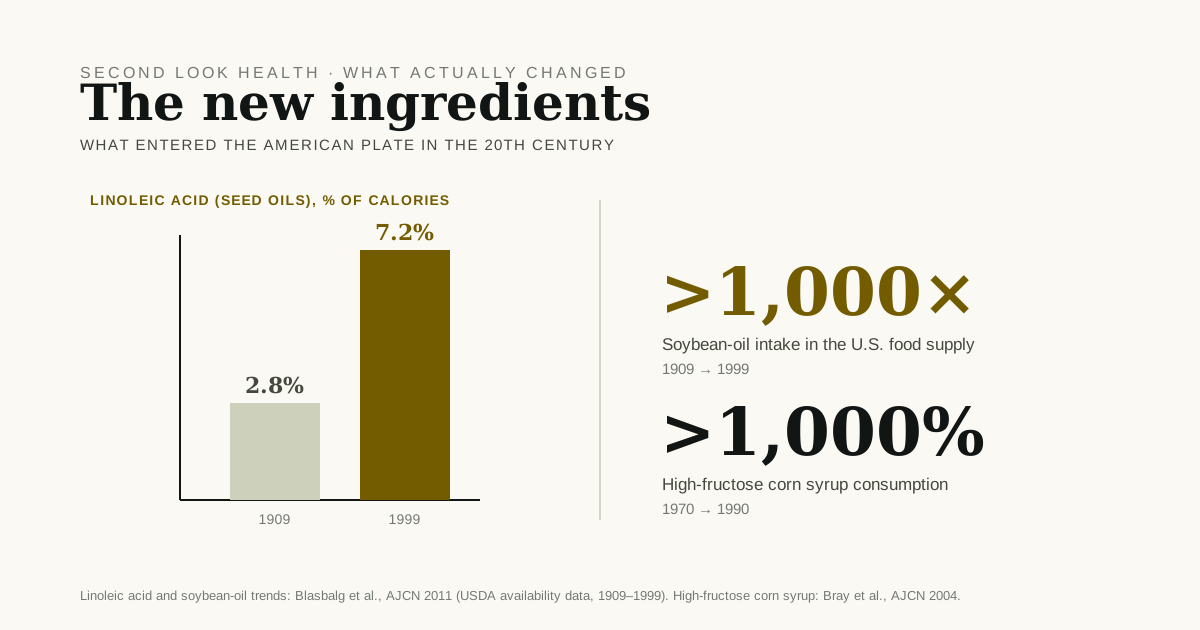
What actually entered the American plate in the 20th century: linoleic acid from seed oils rose from 2.8% to 7.2% of calories and soybean-oil intake rose more than a thousand-fold (Blasbalg, AJCN 2011); high-fructose corn syrup rose more than a thousand percent from 1970–90 (Bray, AJCN 2004).
They Built It Upside Down
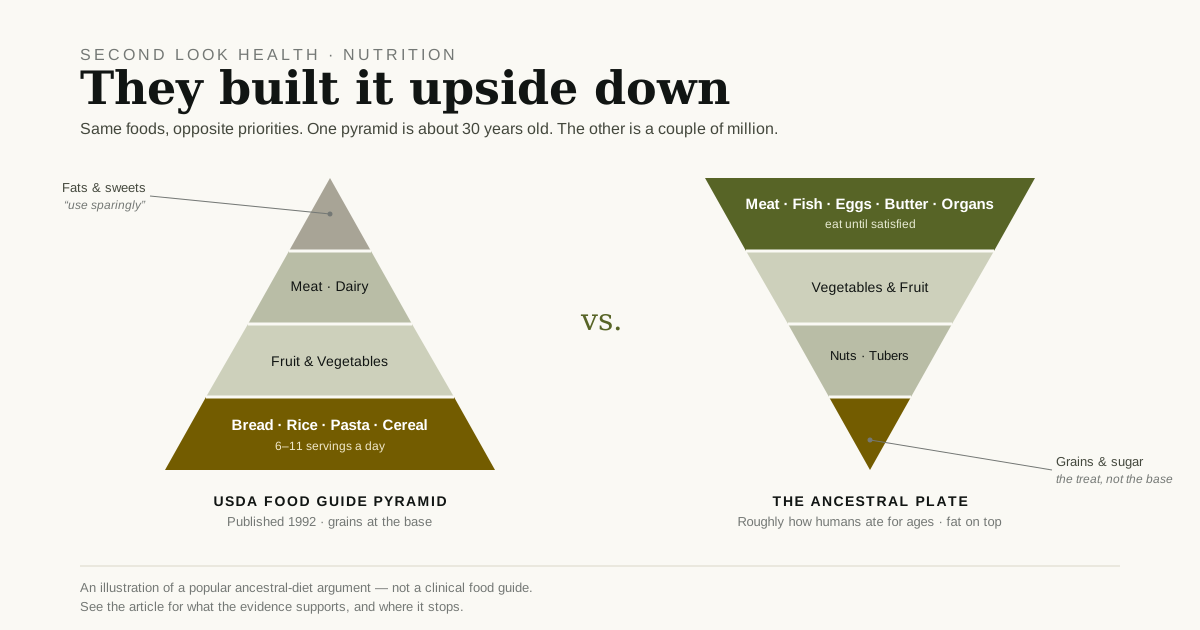
The 1992 USDA pyramid put grains at the base and rationed meat and fat to the narrow tip. Flip it, and you get the ancestral plate our biology actually expects—meat, fish, eggs and traditional fats forming the foundation, with refined grain and sugar squeezed into the tip.
Practical Takeaway
- 01
Judge a food by its age, not its fat. Refined flour, added sugar, and industrial seed oils are the real 20th-century newcomers.
- 02
Eat things your great-grandmother would recognize as food: meat, fish, eggs, vegetables, fruit, and traditional fats—cooked at home.
- 03
Don't fear the steak. Interrogate the bun, the soda, and the fryer oil.
- 04
Evict ultra-processed food first. In the one controlled test, it smuggled in roughly 500 extra calories a day all on its own.