
Nobody Is Coming
Your health is your responsibility. Not because doctors are useless. Not because medicine is fake. Not because every institution is secretly plotting against you. Because nobody else has to live inside your body.
The modern health system is extraordinary at emergencies and mediocre at prevention. It can patch, scan, prescribe, replace, suppress, and monitor. But it cannot care more than you do. If you want health instead of disease management, you cannot outsource the thinking.
The Experiment Already Ran
It is 2026. We understand more about hormones, mitochondria, immunity, metabolism, the microbiome, muscle, sleep, insulin, and inflammation than any generation before us. We can sequence genomes, image organs, manipulate peptides, and model biological systems with machines that sound like science fiction.
And yet, look around. Obesity, type 2 diabetes, metabolic syndrome, autoimmune conditions, chronic fatigue, infertility, anxiety, and digestive dysfunction have all become familiar background noise. Meanwhile, the public-health soundtrack has barely changed: eat less fat, prioritize grains, fear saturated fat, move more, count calories, trust the plate. If that message was basically right for half a century, shouldn't the trend lines look a little less catastrophic?
"If the advice worked, the results would not look like this."
What If the Opposite Is True?
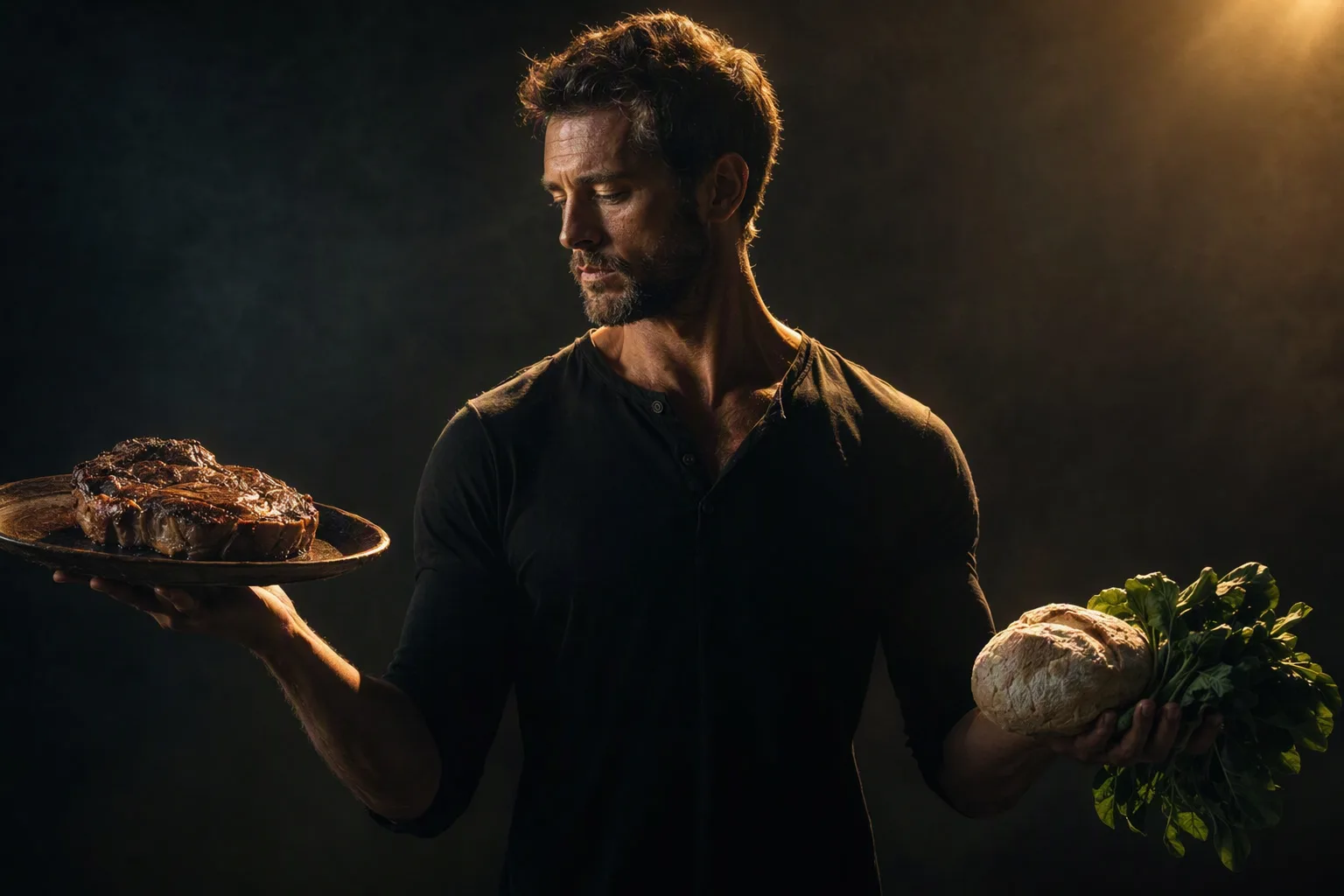
This is the uncomfortable question. Not "why are people so weak?" Not "why can't everyone follow instructions?" But: what if the instructions were bad? What if telling humans to eat like grain-fueled accountants while ignoring biology, appetite, hormones, protein, sunlight, sleep, strength, and evolutionary mismatch was always going to end poorly?
Maybe the truth is often hiding in the inverse. Maybe foods we were taught to fear are not the villains. Maybe foods wrapped in health halos deserve more suspicion. Maybe calories matter, but not in the flat, mechanical way we were sold. Human beings are not spreadsheets with teeth. We are biological organisms shaped by scarcity, seasons, movement, sunlight, hunger, and feast. Start there.
Do the Reading
Taking responsibility does not mean becoming reckless. It means becoming harder to fool. Read the actual paper when you can, not just the headline. Look at population trends with clear eyes. Ask who benefits when sickness becomes normal. Ask what assumptions sit underneath the advice.
Then test carefully. Track how you feel, think, sleep, train, digest, and age. Run your own n=1 experiments without turning your body into a carnival ride. Work with good clinicians when needed, especially if medications or medical conditions are involved. And question everything — including us.
Where to Start
- 01
Read the actual study, not just the headline about the study.
- 02
Ask whether advice makes sense from biology, evolution, and lived human experience.
- 03
Watch population trends, not just expert confidence.
- 04
Treat your own body as data, but change one variable at a time.
- 05
Be skeptical of everyone selling certainty, including people you agree with.
Your health is not a subscription service managed by authority. It is yours, which means the responsibility is yours too.